Aniline, semi-aniline or pigmented: natural look versus protection
The three main ways leather is finished, explained: how much protection each gives, how each one ages, and how to choose for furniture, cars, bags and shoes.
Almost every smooth leather falls on a scale between two ends. At one end the surface is left open, so the leather looks and feels completely natural. At the other end it is sealed under a coloured coat, so it resists almost anything. Aniline, semi-aniline and pigmented are the three main points on that scale. Choosing between them is mostly a trade between beauty and protection.
Aniline: the natural end
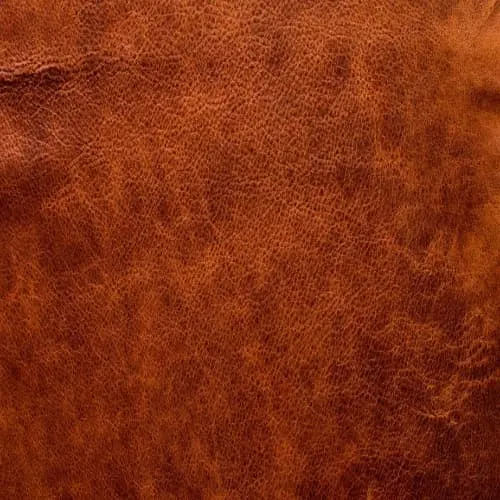
Aniline leather is dyed right through with transparent, soluble dyes, and given no pigmented coat on top. You see the hide’s real surface: every pore, every small mark, every variation in tone. It is warm and soft to the touch, and it breathes.
Because the surface is open, aniline absorbs liquids and oils. A spill can leave a mark, and sunlight fades the colour over time. Many people love exactly that. Aniline develops a rich patina and looks better with age. Only the best hides can be made aniline, since there is nothing to hide their marks.
Semi-aniline: the balance
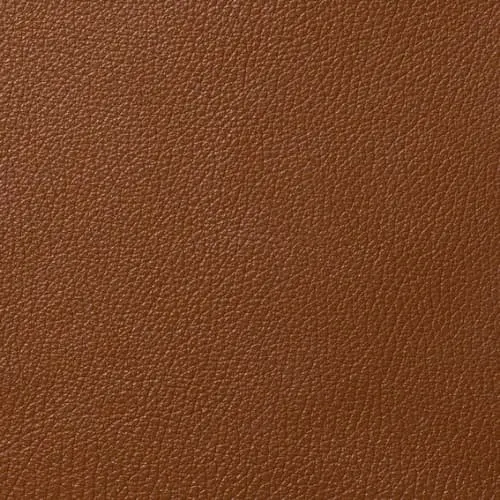
Semi-aniline starts as aniline leather and adds a thin protective coat, which may carry a little pigment. The grain still shows through, but colour is more even and the surface resists light spills and soiling. It keeps most of aniline’s softness while being far easier to live with.
For many buyers, semi-aniline is the sweet spot: natural enough to look premium, protected enough for daily use.
Pigmented: the protected end
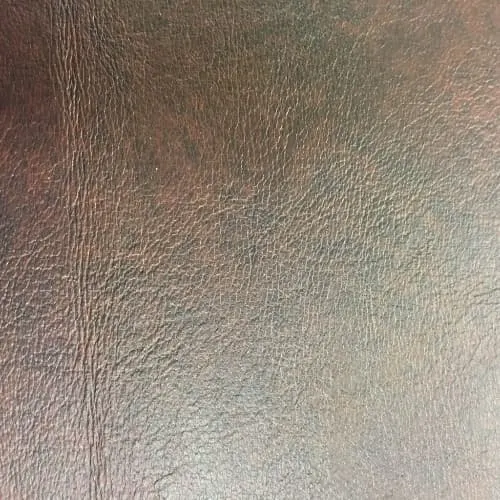
Pigmented leather, sometimes called protected or finished leather, carries an opaque coat of pigment and a protective top coat. The coat gives a uniform colour that matches closely from hide to hide, and strong resistance to stains, scuffs and fading. It is the easiest leather to clean and the most predictable in colour.
The trade-off is character. The surface looks and feels more uniform, and it does not develop a patina. Pigmented finishes are often applied to corrected grain, buffed to remove marks, so a wider range of hides can be used. That keeps them cost-effective.
The three compared
| Aniline | Semi-aniline | Pigmented | |
|---|---|---|---|
| Natural look | |||
| Softness | |||
| Stain resistance | |||
| Fade resistance | |||
| Colour consistency | |||
| Ages with a patina | Yes, strongly | Gently | No |
| Ease of care | Needs care | Moderate | Easy |
Dots are Leather Pond's relative guidance, not lab measurements.
- Aniline
- Minimal
- Semi-aniline
- Moderate
- Pigmented
- High
How to choose
Ask three questions about the product and the people who will use it.
1. How hard will it be used?
A sofa in a family room with children and pets needs protection: semi-aniline or pigmented. A chair in a quiet study can be aniline. Car seats see sun, friction and spills, so pigmented or semi-aniline is the norm.
2. Will the light hit it?
Aniline fades in direct sunlight. If the product sits by a window, or in a car, choose a finish with pigment in it.
3. Do your customers want patina or perfection?
Some customers buy leather precisely because it changes with age. Others expect it to look the same in five years as on the first day. Know which, and choose accordingly.
By product
- Furniture: semi-aniline for most homes; aniline for low-traffic, premium pieces; pigmented for contract, hospitality and family use.
- Car interiors: pigmented or semi-aniline.
- Bags: aniline and semi-aniline for heritage and luxury pieces; pigmented for structured, everyday bags.
- Footwear: aniline and semi-aniline for dress and heritage shoes; pigmented for school, work and easy-care shoes.
The short version
Common questions
Can aniline leather be protected after it is made?
Yes, to a degree. A protector made for aniline leather adds some resistance to light spills without sealing the surface. It does not turn aniline into semi-aniline, and it needs reapplying over time. If you know the product will be used hard, it is better to choose semi-aniline from the start than to try to protect aniline afterwards.
Is pigmented leather real leather?
Yes. Pigmented leather is real leather with an opaque, protective coat on its surface. It is often made from corrected grain, buffed to remove marks before the coat goes on, but it is still cut from a hide. It should not be confused with bonded leather, which is made from shredded fibres.
Why does my aniline sample look different from the hide?
A small swatch is cut from the cleanest part of one hide. A whole hide shows natural variation: changes in tone from backbone to belly, healed marks, and growth lines. That variation is part of what makes aniline beautiful. Approve aniline on a large panel or a whole hide, not on a swatch alone.
Which finish fades least in sunlight?
Pigmented leather, because its coat contains pigments that resist light far better than transparent dyes. Semi-aniline sits in the middle. Aniline fades the most, which is why it is a poor choice for car interiors or furniture beside a sunny window.
Can pigmented leather be repaired?
Light scuffs on pigmented leather can often be touched up with a colour-matched finish, because the colour sits in a surface coat. Deep damage that goes through the coat into the leather is harder to hide. Aniline marks, by contrast, usually blend in over time as the leather develops its patina.
Aniline is the most natural and the least protected. Pigmented is the most protected and the least natural. Semi-aniline sits in between and suits most everyday products. Tell us how your product will be used, and we will send colour cards for the finish that fits.
Want this leather on your line?
Request the catalogue