Full grain, top grain, split: the five leather grades explained
How a hide is layered, what each of the five grades keeps of it, and how to choose the right grade for footwear, furniture, bags and garments.
When a buyer asks for “genuine leather”, “full grain” or “top grain”, they are describing how much of the hide’s top layer the leather keeps. Those words decide how a product looks on day one, how it ages in year five, and what it costs per square foot. This guide walks through the layers of a hide, the five grades made from them, and how to match a grade to the product you make.
A hide has four layers
A hide is not one even material. Cut one open and you see four distinct layers, each with its own structure.
- Grain. The tight outer layer, its fibres packed upright. It carries the hide’s natural surface: the pores, the marks and the character people recognise as leather. It is also where most of the strength and abrasion resistance sits.
- Junction. The boundary where the tight grain fibres give way to looser ones. The hide is split near this line.
- Corium. The thick middle layer of loose, woven fibre bundles. It gives leather its body, stretch and softness.
- Flesh. The underside, next to the animal. It is removed before tanning, so no leather is made from it.
Every grade of leather is defined by which of these layers it keeps, and what is done to its surface.
The five grades
Full grain
Full grain keeps the whole grain layer, exactly as it grew. Nothing is sanded or buffed off, so the natural marks stay visible: small scars, insect bites, growth lines. Those marks are why full grain is often finished lightly or left open. It is the strongest grade, it breathes best, and it develops a patina instead of wearing out. Because the surface hides nothing, only the best hides are used for it, which is why it costs the most.
Top grain
Top grain is grain leather with its surface lightly sanded or buffed to even out marks. Removing that thin top skin makes it slightly thinner, more uniform and easier to finish evenly in a pale colour. It is still grain leather, so it keeps much of full grain’s strength. Many premium sofas, handbags and car interiors use top grain.
Corrected grain
Corrected grain is buffed deeper, then given an applied finish, often with an embossed pattern pressed into it. The coating and print hide the marks of a lower-quality hide behind an even surface. It is durable and easy to clean, but it no longer looks or ages like natural leather. Pigmented and embossed leathers usually fall in this grade.
Split leather
When a thick hide is split, the lower layer comes away from the grain. That lower layer, the split, has no grain surface of its own. It is brushed into suede, or given a coated finish to imitate grain. Barton split and floater are two finishes made from it. Split is softer and less strong than grain leather. It is good value for linings, suede details and coated goods where heavy wear is not expected.
Bonded leather
Bonded leather is not cut from one hide. Leather fibres and offcuts are shredded and bound together into a sheet, usually with a polyurethane surface on top. It is the lowest grade, used where cost matters more than wear. It peels and cracks far sooner than any grade cut from a hide.
| Grade | Strength | Natural look | Evenness | Ageing |
|---|---|---|---|---|
| Full grain | Develops a patina | |||
| Top grain | Ages well, more evenly | |||
| Corrected grain | Stays the same, then cracks | |||
| Split leather | Suede softens; coatings wear | |||
| Bonded leather | Peels and flakes |
Dots are Leather Pond's relative guidance across the five grades, not lab measurements.
Why the grade changes the price
Price follows two things: how much of a hide qualifies for a grade, and how much work the grade needs. Only clean, well-kept hides can become full grain, because every mark shows. Hides with more marks are buffed and finished into top or corrected grain. The split comes from the same hide as the grain, so it costs less per square foot.
- Full grain
- Highest
- Top grain
- High
- Corrected grain
- Medium
- Split leather
- Low
- Bonded leather
- Lowest
A relative order, not a price list. Real prices depend on hide, finish, thickness and quantity.
Matching the grade to the product
Choose the grade by asking two questions: how hard will the product be used, and will the customer see and touch the surface?
- Footwear uppers take flexing, scuffing and weather. Full or top grain lasts; corrected grain suits work and school shoes that need an easy-clean surface.
- Jackets and apparel need softness and drape. Full grain nappa and top grain are the usual choices; suede splits work for details.
- Furniture is touched daily for years. Full or top grain for seats and arms; split or corrected grain is sometimes used on the backs and sides that nobody sits on.
- Car interiors need even colour and abrasion resistance, so top grain with a protective finish is common.
- Linings are hidden and need to be light and smooth. Split or thin goat and sheep leathers work well.
- Bags and small goods depend on the look: full grain for heritage pieces, corrected or printed grain for structured, even fashion bags.
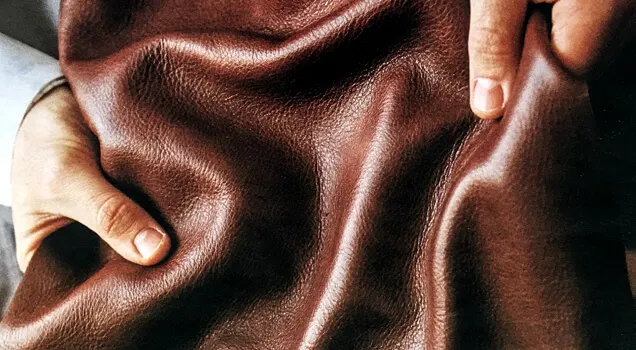
How to check a grade with your hands
You can tell a lot about a sample without a lab:
- Look at the surface under a light. Full grain shows irregular pores and small natural marks. Corrected grain looks perfectly even, often with a repeated pattern.
- Bend it back on itself. Full and top grain wrinkle finely and recover. Heavy coatings show a coarse crease or a white line.
- Check the cut edge. Grain leather shows a tight top band over fibres. Bonded leather shows a uniform, papery core.
- Add a drop of water. Open, lightly finished grain darkens as it absorbs. Coated surfaces bead the water off.
The short version
Common questions
Is top grain better than full grain?
No. Full grain keeps the whole grain layer and is the strongest and longest-lasting grade. Top grain has its surface lightly buffed for a more even look. It is an excellent leather, and often the better choice when you need a pale or very uniform colour, but full grain sits above it in strength and ageing.
What does ‘genuine leather’ mean on a label?
It means the product contains real leather, and nothing more. It does not name a grade, and it is often used for split or corrected grain. If a grade matters to you, ask for it by name: full grain, top grain, corrected grain, split or bonded.
Can split leather look like grain leather?
Yes. A split can be given a coated finish and embossed with a grain pattern so that it looks like grain leather at a glance. It will not have the same strength, breathability or ageing. Checking the cut edge and how the surface creases usually tells the two apart.
Which grade is best for a sofa?
For seats and arms, which are touched and sat on daily, full or top grain lasts best. The finish matters too: semi-aniline or pigmented finishes suit busy family homes. Some sofas use a lower grade on the outside backs and sides, where wear is low.
Why is bonded leather so much cheaper?
Bonded leather is made from shredded leather fibres and offcuts bound into a sheet, usually with a polyurethane surface. It uses material that would otherwise be waste, so it costs far less. It also peels and cracks much sooner than any leather cut from a hide.
Full grain keeps everything and ages best. Top grain is lightly buffed for an even surface. Corrected grain is buffed and coated to hide marks. Split comes from the layer below the grain. Bonded is fibres glued back together. If you tell your supplier what you make and how it will be used, they can recommend the grade that gives you the best value. That is exactly what the catalogue request on our home page is for.
Want this leather on your line?
Request the catalogue