Aniline to hair on: a buyer's guide to 20 leather finishes
What separates aniline, crazy horse, nubuck, nappa, patent and the rest of the 20 leather types, how each one looks and ages, and where it works best.
Two hides tanned the same way can end up as completely different leathers. The difference is the finish: what is done to the surface after tanning and dyeing. The finish decides how leather looks and feels, how it handles water and scratches, and how it changes over the years. We make 20 types of finished leather. This guide groups them into five families, so you can find the right one quickly.
Family 1: natural and open finishes
These finishes keep the grain visible and the surface breathable. They look and feel most like natural leather, and they show the most character over time.
- Aniline. Dyed right through with soluble dyes and no pigment coat on top. Every pore and mark shows. It is the most natural-looking leather and the softest to the touch, but it marks and stains easily. Use it where beauty matters more than protection: premium bags, footwear and furniture in low-traffic rooms.
- Semi aniline. Aniline leather with a thin protective coat that may carry a little pigment. Colour is more even and it resists light stains, while the grain still shows. A good balance for sofas, car interiors and everyday bags.
- Nappa. A soft, full-grain leather, usually from sheep or goat, finished to stay supple. The standard for jackets, gloves and fine apparel.
- Smooth. A closed, even grain surface that is easy to wipe clean. A dependable choice for shoes, belts and small goods.
Family 2: pull-up and waxed finishes
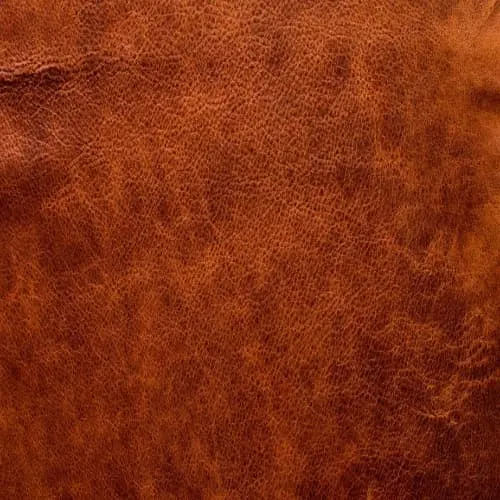
These leathers carry oils or waxes in and on the surface. When the leather is bent, stretched or rubbed, the oils move and the colour lightens. That is the “pull-up” effect, and it is what gives work boots and heritage bags their worn-in look.
- Crazy horse. A heavily waxed leather whose colour lightens wherever it is creased or scratched. Rubbing with a thumb blends small marks back in.
- Oil pull up. Oiled rather than waxed. It lightens when stretched, then settles back. It is softer and more supple than crazy horse.
- Waxy. A waxed surface with a soft sheen. Marks show as lighter streaks and can be buffed.
- Crunch. A firmer leather with a crisp handle and an audible “crunch” when flexed. It is used where structure matters.
Family 3: buffed and split finishes
These finishes are made by brushing or buffing a surface into a nap, or by finishing the split layer.
- Nubuck. Grain leather buffed on the grain side into a fine, velvety nap. It is stronger than suede because it keeps the grain, but it marks and needs protecting from water.
- Suede. The split side brushed into a soft nap. It is lighter and softer than nubuck, and less durable.
- Barton split. A finished split leather with a coated surface, made for footwear and bags.
- Floater. Leather milled in a drum until the grain relaxes into a soft, pebbled pattern. It is supple and hides small marks well.
Family 4: coated and printed finishes
These finishes put a layer on the leather to give an even colour, a pattern or extra protection.
- Pigmented. A pigment coat gives uniform colour and the best resistance to wear, light and stains. Common on car seats, high-traffic furniture and school shoes.
- NDM and PDM. Two drum-milled leathers, softened by tumbling in the drum. The milling brings out a natural grain pattern and a softer hand.
- Printed. A pattern printed onto the surface for fashion effects.
- Patent. A high-gloss, mirror-like coated finish for dress shoes and statement accessories.
- Exotic. Leathers embossed or printed with the look of exotic skins.
Family 5: speciality leathers
- Lining. Thin, light leather for the inside of shoes, bags and jackets. It must be soft, smooth and colourfast against socks and clothing.
- Hair on. The hide is tanned with its hair left on. It is used for accent panels, rugs and fashion pieces.
The finishes compared
| Finish | Natural look | Stain resistance | Softness | Shows wear as |
|---|---|---|---|---|
| Aniline | Rich patina | |||
| Semi aniline | Gentle patina | |||
| Nappa | Soft creasing | |||
| Crazy horse | Light scuffs that buff out | |||
| Oil pull up | Lighter stretch marks | |||
| Nubuck | Flattened nap | |||
| Suede | Flattened nap | |||
| Pigmented | Little change, then wear spots | |||
| Patent | Creases and scuffs |
Dots are Leather Pond's relative guidance across these finishes, not lab measurements.
Choosing a finish by product
- Work and heritage boots: crazy horse, oil pull up, waxy.
- Dress shoes: smooth, semi aniline, patent.
- Casual and fashion footwear: nubuck, suede, printed, floater.
- Jackets and gloves: nappa, aniline, suede.
- Sofas and seating: semi aniline or pigmented for family homes; aniline for low-traffic rooms.
- Car interiors: pigmented or semi aniline.
- Bags: almost anything, depending on the look. Structured fashion bags often use pigmented or printed finishes; soft slouchy bags use floater, nappa or pull-up leathers.
Colour and consistency
Every type comes in a full range of colours. Natural finishes vary more from hide to hide, because the dye shows the hide’s own surface. Pigmented finishes match more closely across a large order. If colour consistency matters, for example across the seats of a car or a run of sofas, tell your supplier early. Ask for colour cards, and agree an approved standard before production.
Common questions
What is the difference between nubuck and suede?
Both have a soft, velvety nap. Nubuck is grain leather buffed on the grain side, so it keeps the strength of the grain. Suede is made from the split side, so it is softer and lighter but less durable. Both need protection from water and oil.
Do pull-up leathers scratch easily?
They mark easily, by design. The oils and waxes move when the leather is flexed or scratched, which lightens the colour at that spot. Most light marks can be rubbed back in with a thumb or a soft cloth. Many customers choose pull-up leathers precisely for that worn-in character.
Which finish is easiest to keep clean?
Pigmented leather, followed by patent and semi-aniline. Their coats keep spills on the surface, so a damp cloth and a mild leather cleaner deal with most marks. Aniline, nubuck and suede absorb liquids and need more care.
Can any finish be made in any colour?
Every type comes in a range of colours, but some finishes suit some colours better. Pale colours show marks more on open finishes, and pull-up effects look strongest in mid to dark tones. Ask for colour cards for the finish you choose.
Can you develop a finish that is not on the list?
Yes. New finishes are developed every week or month, and leather can be developed to your own specification: thickness, colour, finish and feel. Send a sample or describe what you need with your catalogue request.
If you are unsure which of the 20 suits your product, request the catalogue and tell us what you make. We will send colour cards for the finishes that fit.
Want this leather on your line?
Request the catalogue